Build Wealth for the Future with Smart Stock Investing
Investing in stocks is one of the most effective ways to grow your wealth over time. With a well-planned long-term investment strategy, you can harness the power of compounding, navigate market fluctuations, and achieve financial freedom.
Why Choose Long-Term Investing?
✅ Compounding Growth – Let your investments multiply over time.
✅ Financial Security – Build a robust portfolio for your future.
✅ Passive Income – Earn through dividends and capital appreciation.
Built For Long-Term Investors
We’re revolutionizing online Trading & investing with powerful features designed for you! Access Future & Options, Commodities, Stocks, ETFs, Mutual Funds, and Bonds—all in one seamless platform!
Easily Trading
F&O , Commodities, Currency
Organize Your Portfolio with
Investment Labels
Earn Higher Returns on
Top Mutual Funds
Create Wealth with
SIPs in Stocks & ETFs
Bid Early for IPOs with
Pre-Apply
Keep Track of All
Corporate Action
Features and Scope of the Trading Application.
Trading application will be a Mobile based solution. It will be developed for Android & iOS based mobile devices.
This is based on the superior performance, reliability the application for the long run.
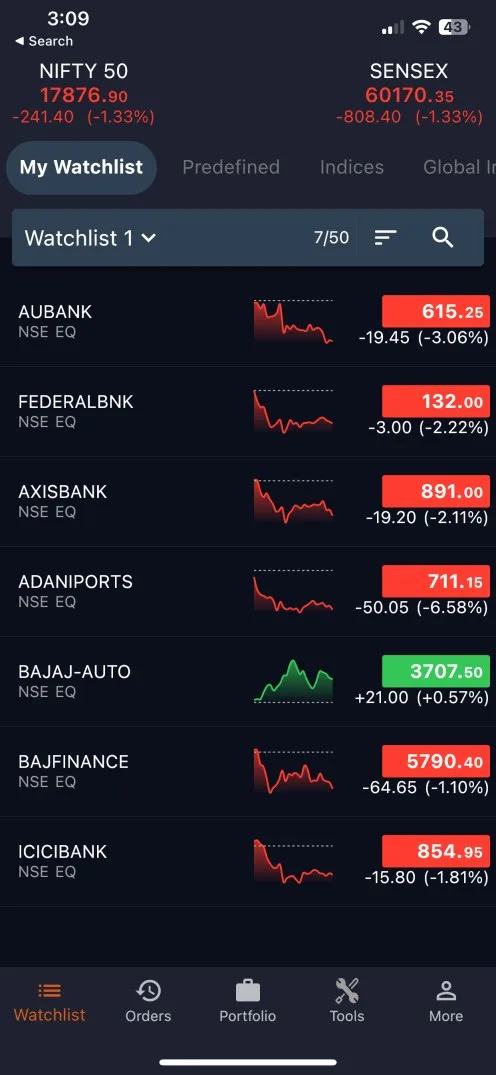
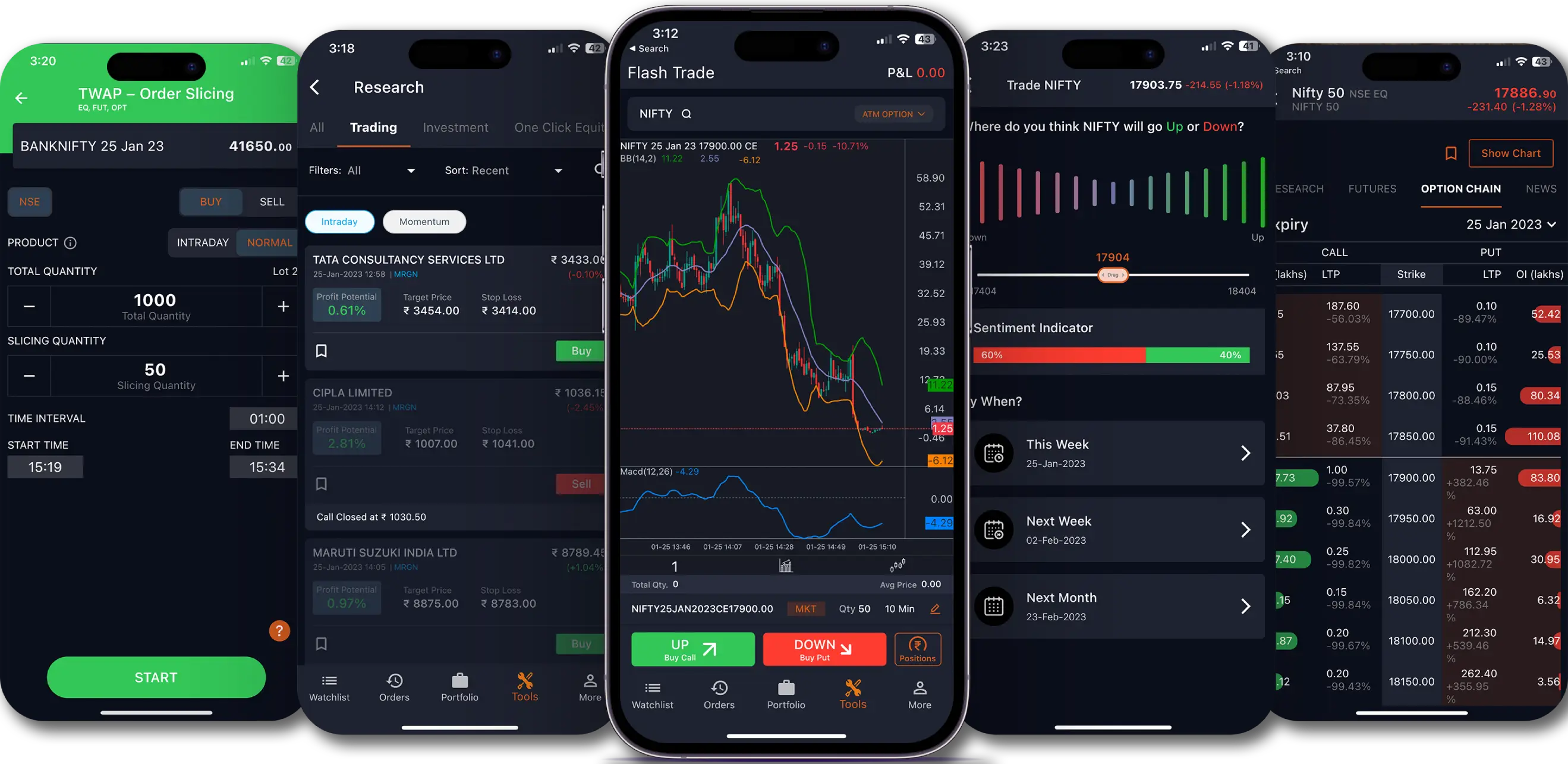
✅ Multiple Customizable Watch-lists.
✅ Exchange Defined Stocks Groups.
✅ Global Indices
✅ Market Summary
✅ Market Overview
✅ Charts
✅ Options Chain
✅ Flash Trades.
✅ Basket Orders.
✅ Easy Options
✅ Themes
✅ Live News
Testimonials
Love from Traders & Investors
Lorem ipsum dolor sit amet, consectetur adipiscing elit. Ut elit tellus, luctus nec ullamcorper mattis, pulvinar dapibus leo.
Lorem ipsum dolor sit amet, consectetur adipiscing elit. Ut elit tellus, luctus nec ullamcorper mattis, pulvinar dapibus leo.
Lorem ipsum dolor sit amet, consectetur adipiscing elit. Ut elit tellus, luctus nec ullamcorper mattis, pulvinar dapibus leo.
Open your
FREE
demat account in minutes!
Join a dynamic community where market enthusiasts thrive! Connect with like-minded investors and share your ideas—your voice shapes our platform!
Choose a Depository Participant (DP) – Select a bank, broker, or financial institution that offers Demat services.
Fill Out the Application Form – Provide personal, financial, and bank details.
Submit KYC Documents – Upload PAN card, Aadhaar card, proof of address, bank statement, and passport-sized photograph.
Complete In-Person Verification (IPV) – Some DPs require online or physical verification.
Receive Login Credentials – Once verified, you will receive account details to access your Demat account.
How to choose correct vendor for investment?
An investment vendor refers to a broker, financial institution, or online platform that facilitates stock market investments, mutual funds, bonds, or other financial instruments.
What do I need to buy stocks?
To start investing in shares in India, you usually need three accounts:
A Demat account, where your shares and other securities are held in electronic form.
A Trading account, which you use to place buy and sell orders on the stock exchanges.
A linked bank account, to add money for investing and receive sale proceeds or dividends.
How do I buy stocks online?
Open a Demat and Trading account with a SEBI‑registered broker or bank.
Complete KYC formalities and link your bank account to the trading account.
Transfer funds from your bank to the broker’s platform.
Search for the company you want to invest in and review its price and basic details.
Select the order type (Market or Limit), enter the quantity, and submit the order.
Once the trade is executed and the settlement is done, the shares will show in your Demat account.
What is the minimum amount to start investing?
There is no fixed starting amount; you can begin with the cost of one share plus applicable charges.
Many beginners start with a small amount, then increase their investment size as they gain experience and confidence.
What types of stock orders can I place?
Market Order – An order to buy or sell immediately at the best available market price.
Limit Order – An order to buy or sell only at a specified price or better, giving you control over the trade price.
Stop‑Loss Order – An order that is activated when the price hits a trigger level, designed to help cap potential losses.
Can I buy stocks without a broker?
No, retail investors must place orders through a SEBI‑regulated broker or an online trading platform; you cannot trade directly on the exchange on your own.
How long does it take for stocks to reflect in my account?
For most equity trades in India, settlement currently runs on a T+1 basis, so shares bought on day T are usually credited to your Demat account on the next working day.
In some segments or special situations, the settlement timeline may differ as per the rules of the exchange and depository.
Can I sell my stocks anytime?
You can place sell orders during normal equity market hours, typically 9:15 AM to 3:30 PM IST, Monday to Friday (excluding trading holidays).
Some platforms also offer after‑market order (AMO) facilities, where you can place instructions outside market hours to be sent to the exchange in the next session.
Is it compulsory for the investors to use the new handle only?
The investors can choose their preferred mode of payment, such as UPI, IMPS, NEFT, RTGS, or Cheques. If an investor opts to use UPI for the payment to registered intermediaries, then they have to do so only using the new UPI IDs allotted to registered intermediaries.
What should I check while making payment using the new UPI IDs/ QR Code?
Investors need to keep following things into consideration: 1. The UPI ID should properly show the name of the intermediary, followed by the short abbreviation of their category for example “brk” for Brokers, “mf” for Mutual Funds to the left of the “@” character. 2. On the right side of the “@”, the new and exclusive handle “@valid” should be present, followed by the bank name. 3. On the confirmation screen, the app should show a white thumbs-up icon inside a green triangle. 4. The QR code generated using the utility will have a white thumbs-up icon inside a green triangle. It will also display the UPI ID just below the QR code.
Do investors also need to obtain new UPI handles to transact in the securities market?
No, the new UPI IDs are only for intermediaries to obtain and investors can continue to use their existing UPI IDs.
Whom to approach if my transaction/ payment fails with the new UPI ID?
The secure validated UPI ID of intermediaries will use the same banking channel as the earlier generic UPI handles. In case of any technical difficulty, investors are requested to approach their respective bank.



 Easily Trading
 Organize Your Portfolio with
 Earn Higher Returns on
 Create Wealth with
 Bid Early for IPOs with
 Keep Track of All